
Trygve…what exactly do you do again?
On Loving What You Can’t Help But Love


Every Friday morning I have breakfast at Emma’s Country Kitchen, on St. Claire Street in Toronto. It’s the spot (I’ll write about Emma’s and why I love it in another post.) I meet up with my friends Jason Byasee and Dean The Warrior (this is his handle I gave Dean in my contacts because - well - Dean’s an actual warrior: a former Army Ranger with three tours to his name, and the shrapnel in his body to prove it; he is of the Beausoleil First Nation band, hailing from the proud community of Christian Island on Georgian Bay, and a committed Christian). Dean’s the guy you always want having your 6 o’clock! I’m grateful he has mine!
At breakfast last Friday, between Emma’s Benny’s, Dean asked me — with the particular mix of curiosity and mild bewilderment that only true friends can pull off — Trygve, what exactly do you do again?

It’s a fair question. After more than twenty-five years of ordained ministry, twenty-two of them in a collegiate context, I’ve made a turn. And turns, even good ones, require explanation.
Here’s my answer:
I’m serve as the Executive Director of the Preach For Foundation (preachfor.org). It’s a new organization, founded by a man I have grown to love, admire, and trust. Don Kanak, who in his “retirement'“ founded PreachFor as a way to raise up leaders for the Church. He found me and hired me. I could not be more grateful. Our mission is to identify, nurture, and empower exceptional young leaders for the church. Simple enough to say. A life’s work to do.

But let me back up, because the what only makes sense inside the why, and the why is this: we love the church. Full stop. Not as a professional obligation. Not as a brand I’ve built a career around. We love the church. I love it the way you love something that has cost you something — the way you love a person or a place or an idea that has marked you permanently and you wouldn’t trade the marking even on your worst days. We don’t mean any harm by it. We just love the Church.
And I believe — with everything I have — that it’s in trouble. Not existentially. Christ was fairly unambiguous about the gates of hell and their ultimate futility. But institutionally, generationally, the church in our moment is navigating a leader shortage — in quantity and in quality — that is less like a staffing problem and more like a slow bleed-out. The kind you notice gradually, and then all at once.
There is no single answer to how to address the problem. Anyone who tells you otherwise is selling something. But there is an answer — one answer among the necessary many — and it’s the one I’ve given myself to: recruiting, inspiring, and forming a new generation of young leaders who love the church enough to give their lives to it.
That’s what Preach For is. That’s why I’m here. That’s what I do.
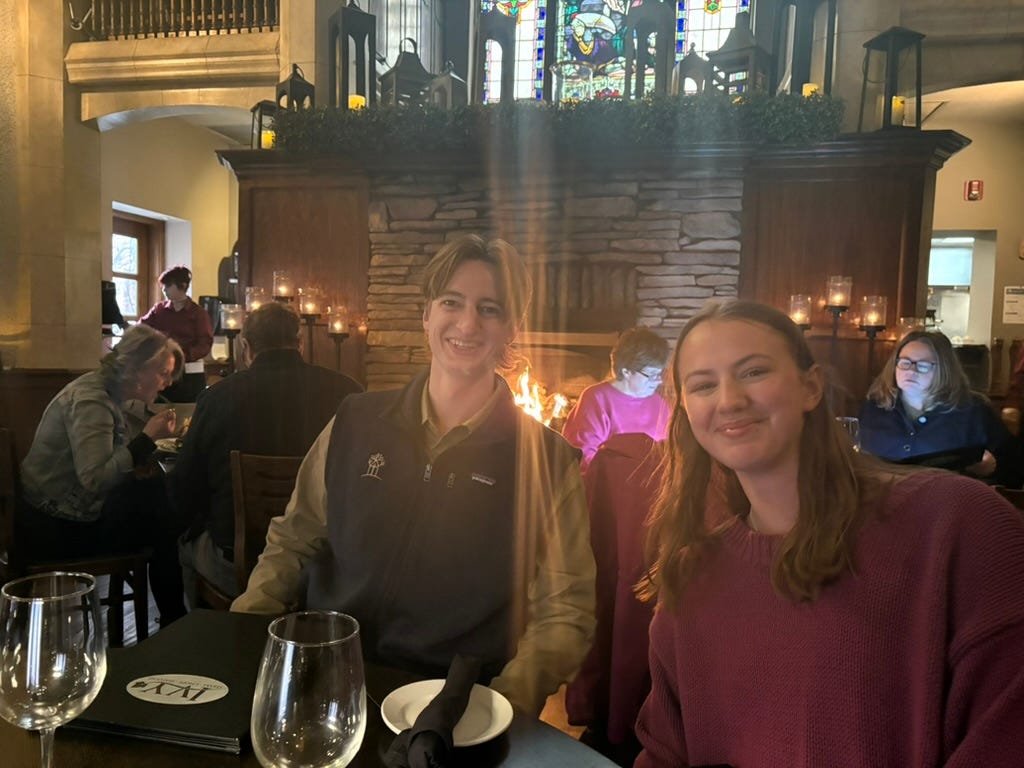
I can tell you truthfully, the young people coming up behind us are extraordinary. They are curious and brave and deeply tired of cheap answers. They are seeking a life with adventure and want to pursue something that is larger than themselves. What they often lack is not calling. It’s someone seeing them - naming their gifts - and taking them seriously. But many lack those adults in their life. They are lacking the relationships - especially within the church - that form their best selves. Yet it’s precisely these kinds of friendships that help equipping from young adults turn a spark into a sustained flame.
That’s the gap Preach For is trying to fill.
Here’s the thing about the church that I think we miss, especially those of us who have been hurt by it — and most of us have been, haven’t we? There’s a theological claim buried underneath the ecclesiology that doesn’t get said often enough: to love the church is to love yourself.
Stay with me.
Paul’s image of the church as the body of Christ is not a metaphor for organizational structure. It’s an organic structure, that at the same times anchors an ontological identity. When you are baptized into Christ, you are baptized into his body — which is the church - in, with, and through the Holy Spirit. For Christians, this is more than a symbol, its an invisible sign of where our true identity and citizenship belongs. You belong to the Church, which is to Christ own body. Which means that when you are frustrated with the church, you are, in a meaningful sense, frustrated with yourself. When the church is broken, you are part of what is broken. When it flourishes, something in you flourishes too, whether you feel it or not.
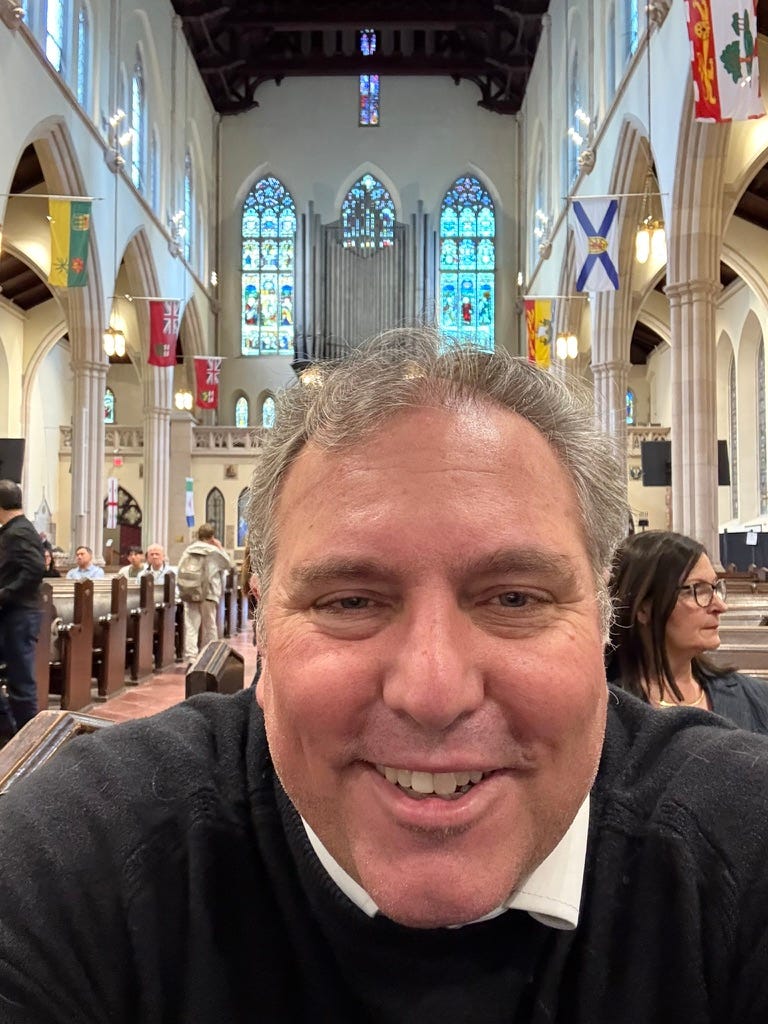
I find this both convicting and strangely comforting. Convicting, because it forecloses the spectator’s posture — the arms-crossed, I’ll-watch-from-a-distance - too cool to care detachment that passes for discernment in a lot of our cultural conversations about the church. Comforting, because it means the church’s imperfection is not a disqualification. It’s a description of reality. The church is full of hypocrites because we are hypocrites. It is not a place you go when you have it all figured out. It is the place you go when you don’t. It is where God meets us in the in-between moments — in the broken places, the unresolved places, the places where we arrive empty and leave, if we’re lucky, a little less so.
Beating up on the church has become its own kind of cultural currency. It’s fashionable to catalog its failures — and Lord knows the list is not short — and then walk away with a clean conscience and a sense of moral superiority intact. I understand the impulse. Some of those failures are grievous, and the people who left carrying wounds didn’t deserve them, and deserve nothing but compassion and both ears.
But it’s also, at this point, a little predictable. The more interesting move — I argue - the harder, braver, more spiritually serious move — is to stay. To love the church not because it has earned it, but because love was never contingent on that. There is no utopia this side of the already and not yet. Our perfection is not in us. It never was. And a church that waits until it deserves love before it receives love will wait forever.
What troubles me most is the collateral damage. This ambient cultural disdain for the church is quietly discouraging a whole generation of extraordinary young people from even considering ministry as a viable life. The church has become, in the popular imagination, a fine place to visit — but not a place worth giving your life to. And that, I want to say plainly, is a tragedy. Because to refuse to give yourself to the church is not just a career decision. Theologically, it is a refusal to love yourself. We are the church. The body is us. You cannot hold it at arm’s length indefinitely without eventually losing something of yourself in the distance.
So what does Preach For actually do?
This fall, we are launching the Preach For America Fellowship — placing exceptional young leaders into flourishing congregations alongside outstanding pastors and priests, in communities committed to the flourishing of the places they inhabit. Two years. A liveable wage. The opportunity to pursue a master’s in theology and leadership. A wise pastoral mentor and a lay mentor walking alongside them. And a network of relationships — the kind that form you, not just inform you — that will sustain them for a life of service.

The image I keep returning to for this work comes from the Psalms: a tree planted by streams of water. Deep roots. Stability in the soil. Shade for the weary. Food for the hungry. Strong limbs for children to climb. And underneath it all, a root system quietly doing the invisible work — filtering the toxins, anchoring the ground, making the landscape livable for everything growing around it.
That’s what a healthy church does. That’s who a wise leader is. Not a manager of programs or a curator of experiences, but a rooted tree — someone whose depth underground determines their reach above it.
What we’re trying to build at PreachFor is a forest. An ecosystem of interdependent communities — young leaders, flourishing churches, and seminaries — with root systems so intertwined that when one is depleted, the others send nourishment. That’s not a metaphor for an org chart. It’s a vision for how the church actually grows.
Don, our Chairman, likes to say Called to serve. Equipped to lead. The order is not incidental. Service is the orientation — the posture that shapes everything else. Leadership is the capacity that service, over time, produces. And the reason any of it matters is the same reason it has always mattered: we love the church. Full stop.
When leaders know who they are in Christ — when that identity is settled and quiet rather than anxious and performed — it changes the kind of communities they build, the kind of people they become, and the kind of hope they’re able to carry into rooms that have forgotten what hope feels like.
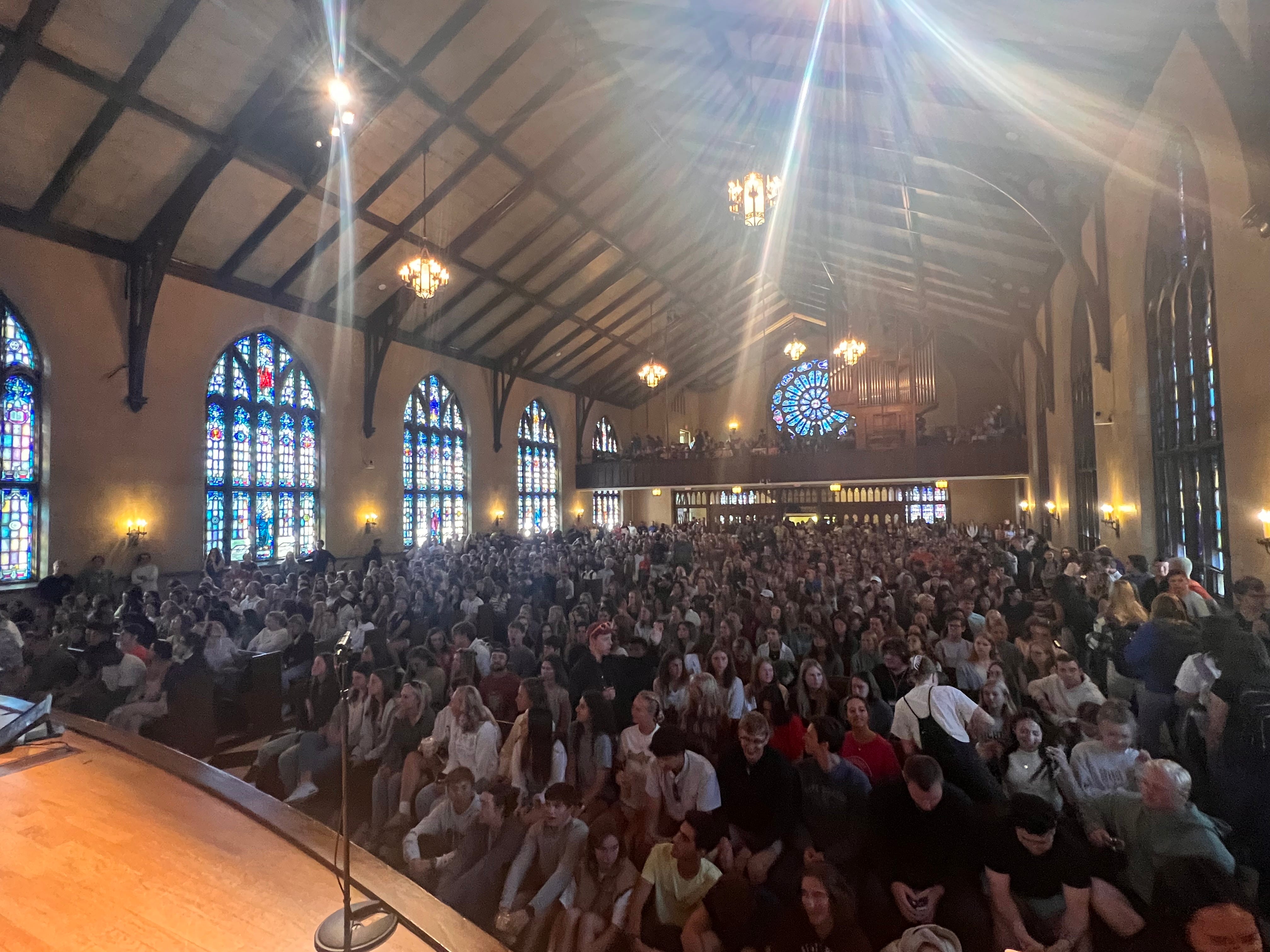
I have given over 25 years to the work of Christian formation to young adults. I have watched what happens when young leaders are seen, named, and poured into. I have also watched what happens when they aren’t — when they enter ministry well-educated and well-intentioned and profoundly unformed, alone, without the scaffolding of wisdom and community to hold them up through the inevitable hard years.
We can do better. The stakes are too high and the people are too good.
If you love the church — even a complicated, conflicted, sometimes-frustrating love — I want you to know there is something worth believing in here.
We are not trying to save an institution. Only God does the saving. What we are trying to do is invest in people and in churches, so that they in turn invest in people — in the communities and congregations and neighbors who need them. We are trying to build a movement of leaders who form leaders, a chain of formation that stretches forward into a future we won’t fully see, but whose far shores we trust are there.
That’s worth getting out of bed for. It might even be worth your joining me.
So here is how you can:
Pray. That’s not a consolation prize — it’s the first work. Pray that God raises up the young leaders, the churches, and the resources this work requires. Pray that he opens the right doors and closes the wrong ones. Prayer is not the least you can do. In this work, it is close to the most.
If you know an exceptional young leader — someone in your community with unusual gifts, a restless sense of calling, that particular quality of attention that marks a person made for this — tell me about them. Write me. Call me. Find me. That conversation could change the arc of someone’s life.
And come along for the journey. Follow our work through our monthly newsletter. It is the best way to stay close to what we’re building — and to know how to pray, support, and act as the work unfolds.
I hope you will. I genuinely do.
We are just beginning. The best work is ahead. And somewhere out there is a twenty-year-old who doesn’t yet know that the thing stirring in them is a calling — who needs someone to notice, to name it, and to walk with them into it.
Maybe you know who that person is. Maybe you’re wondering if it’s you. Either way — don’t wait for someone else to do this. The church doesn’t need more observers. It needs people who love it enough to act.
Who are you investing in? And what would it mean, in your own sphere — your classroom, your workplace, your neighborhood, your church — to be the kind of presence that helps someone else become who they were made to be?
Sit with that. The sitting is where the answer usually shows up.
Subscribe to The Kingfisher Study
Faithful presence. Thoughtful leadership. Deep formation.
Please share with someone
I so very much love this work - so important and needed. I'm just west of you, in Oakville, and I've started a summer experiment - inviting young adults in my church into a summer preaching community. We talk about preaching and ministry, they learn some of the craft of preaching, have a community around them to encourage their gifts and critique their work, and then they preach a sermon in our church. All in the shared hopes of them growing in their love for the church and perhaps one day to give their lives in service to it.