


There is a kind of lament making its rounds in some Christian circles these days. You have heard it. Perhaps you have said it. The church is dying. Secularism has won. The culture has turned against us. Kids today with the Facebook, and the iphones, and the lack of respect…The tone is elegiac, the posture defensive, and the diagnosis—I want to say this kindly—is almost entirely wrong.
Let me start with the assumption buried inside the lament, because it is worth naming: that once upon a time, things were different - the church was great! That there was a golden era—Christendom, perhaps, or mid-century America with its full pews and civic religion—when the church and the culture were genuinely aligned, and faith was not merely assumed but lived. It is a beautiful story. It is also, largely, a myth.
Charles Taylor spent nearly 900 pages in A Secular Age tracing how we got here, and he is not wrong that something has shifted. The conditions under which belief operates have changed. The air has thinned. Faith no longer comes for free with the social inheritance. You cannot simply absorb Christianity from the atmosphere the way a previous generation might have absorbed it from Sunday school, civic life, and the assumption that of course one goes to church. That is true. That has changed.
But here is what I want to say, and I want to say it plainly: that is not a catastrophe. It is a clarification.
What is dying is not the church. What is dying is version of a cultural Christianity—and those are not the same thing.
Cultural Christianity is the faith you hold the way you hold values. It is reasonable, respectable, and entirely possible to maintain without Jesus. That is, in fact, its fatal flaw. Once the values have been internalized, once you are kind and generous and vaguely spiritual and committed to your family and neighborly enough, you do not need the gospel anymore. You have extracted what you came for. The husk remains; the kernel has been quietly discarded. And for a long time, the church looked out at the full pews and the civic respectability and called it flourishing.
It was not flourishing. It was confusion.
The church does not exist to produce values. The church exists because something happened—an event so strange and singular and reality-altering that it changed the very grammar of human existence. A man died, and then he did not stay dead. That is the thing. That is the whole thing. And you cannot domesticate that into a value system without losing everything that makes it interesting, demanding, and true.
What secularism has done—and here is where I depart from the lamenters—is burn away the atmospheric pressure that kept cultural Christianity alive without asking much of anyone. The comfortable, sentimental, sanitized version of faith—the one that never cost anybody anything, never demanded a rearrangement of loyalties, never pressed against the empire with anything sharper than a nicely framed verse—that version is struggling to breathe. And I find, when I am honest, that I am not sorry.

Wendell Berry has a poem that ends with the phrase “practice resurrection.” Eugene Peterson made it the title of a book. I keep coming back to it because it names something true about what it means to be the church in this particular moment. Not perform resurrection. Not announce resurrection as a proposition. Practice it. Live into it. Let it be the logic by which you organize your days, your loyalties, your loves.
Because here is what I think is actually happening in this moment of supposed ecclesial decline: the church is being pruned.
Jesus himself used the image. The vinedresser cuts back the branches—not because the vine is dying, but because fruitfulness requires it. Pruning is not pleasant. It looks, from the branch’s perspective, very much like dying. But the purpose is abundance, not diminishment. Every branch that bears fruit he prunes, that it may bear more fruit.
I want to suggest that what looks like loss may be exactly this: a pruning that is preparing the church for something it could not have been in its more comfortable, culturally-inflated form.

The church is being refined for a global reality. The center of Christian gravity has long since shifted south and east—to Lagos, to São Paulo, to Seoul, to Nairobi. The story of Christianity in the twenty-first century is not written in the anxiety of mainline decline; it is written in the extraordinary vitality of a faith that has never been more globally alive. When we speak of the church dying, we are, I think, speaking parochially. We are speaking of our church, our cultural moment, our inherited form—and mistaking that particular loss for a universal verdict.
The church is being refined for a diverse experience. The homogeneous unit principle—the idea that churches grow when everyone looks the same and thinks the same and came from the same suburb—has run its course, and good riddance to it. What is emerging, slowly and painfully and not without conflict, is something that looks more like the communion the New Testament actually describes: every tribe, tongue, and nation, not as a slogan on a banner, but as the actual texture of gathered life.
And the church is being refined for a rearranged set of loyalties. This may be the most urgent thing. There is a version of Christianity that has confused the flag with the font, the pledge of allegiance with the creedal confession, the nation with the kingdom. That confusion has produced tremendous damage. And the pressure of our moment—the way it is forcing questions about what, exactly, we are committed to and why—is not, I think, the enemy of the church. It is the friend of its integrity.
Not to a flag, but to a font. Not to a nationalistic story that requires a particular people to be at the center of history, but to an ancient story that insists the center of history is a cross, an empty tomb, and a Spirit poured out on all flesh.
I will say what I actually believe: I do not think there has been a better time to be a follower of Jesus.
I know that sounds counterintuitive. I know the statistics are sobering and the headlines are discouraging and the institutional anxieties are real. But I mean it. When faith costs something—when it is not simply the path of least resistance, not the thing your parents did, not the civic expectation—when it has to be chosen and re-chosen against the grain, then the people who choose it tend to mean it. And people who mean it tend to do interesting things with it.
The narrow way, Jesus called it. Not the wide road of cultural assumption and inherited belonging, but the narrow way of actual discipleship, actual surrender, actual love of the kind that gets you into trouble. That way has always been narrow. What has changed is simply that it looks narrow now. The surrounding terrain has shifted, and the path is visible for what it always was.
This is not cause for despair. It is, if anything, cause for something like relief.
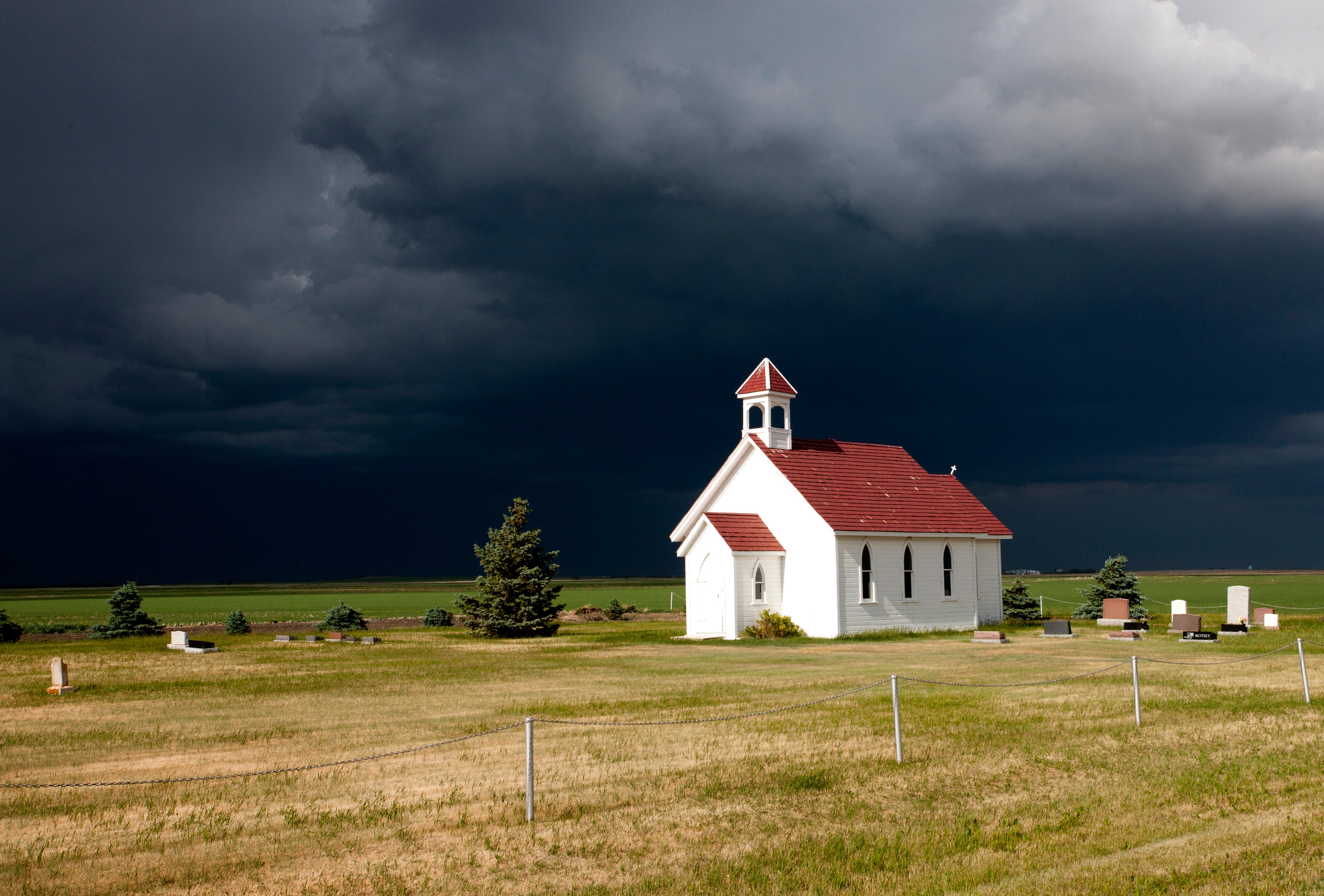
The church is not dying.
The church cannot die. Not because of its institutional resilience or its cultural influence or its ability to adapt its programming to a changing market. The church cannot die because its source is the Resurrected One, and the Resurrected One does not stay dead.
He is risen. That is the whole argument. That is the irreducible, unmanageable, endlessly generative fact at the center of everything. Not a value. Not a therapeutic framework. Not a cultural inheritance. A man who walked out of a tomb and whose light, as the Gospel of John insists from its very first lines, the darkness has not overcome and will not overcome.
That light is eternal. And wherever two or three gather in his name, wherever bread is broken and wine is poured and the ancient words are spoken over the waters of baptism in a new moment, that light is present.
Not dying. Refining.
Practice resurrection!
Trygve Johnson
Subscribe to The Kingfisher Study
Faithful presence. Thoughtful leadership. Deep formation.
If this work matters to you, share it with someone.